AI workflow automation is the practice of using artificial intelligence to design, execute, and optimize sequences of tasks across tools, teams, and systems without constant human intervention. For operations and automation professionals, this concept represents a fundamental shift in how work gets structured and completed. Instead of manually routing data between applications, chasing approvals, or monitoring repetitive processes, you build intelligent workflows that handle these steps on their own.
The stakes are real: organizations that fail to adopt AI workflow automation risk falling behind competitors who move faster, make fewer errors, and allocate human talent to higher-value work. This article breaks down what structured workflow execution actually means, how it functions in practice, where it delivers measurable results, and what misconceptions still trip people up.
Key Takeaways
- AI workflow automation connects tools, data, and decisions into self-executing sequences.
- Structured workflow execution reduces errors by enforcing consistent, repeatable process logic.
- AI agents can make routing decisions that previously required human judgment calls.
- Automating business processes frees operations teams for strategic, non-repetitive work.
- Starting small with one workflow produces faster ROI than attempting organization-wide rollouts.
What Is AI Workflow Automation and How Does It Work?
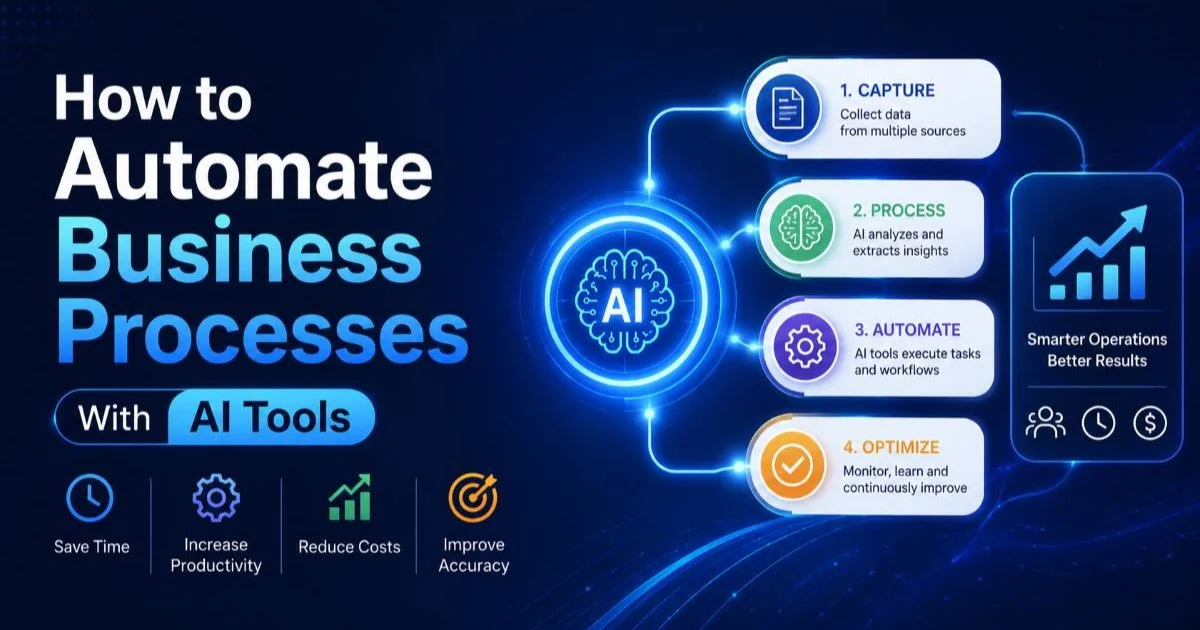
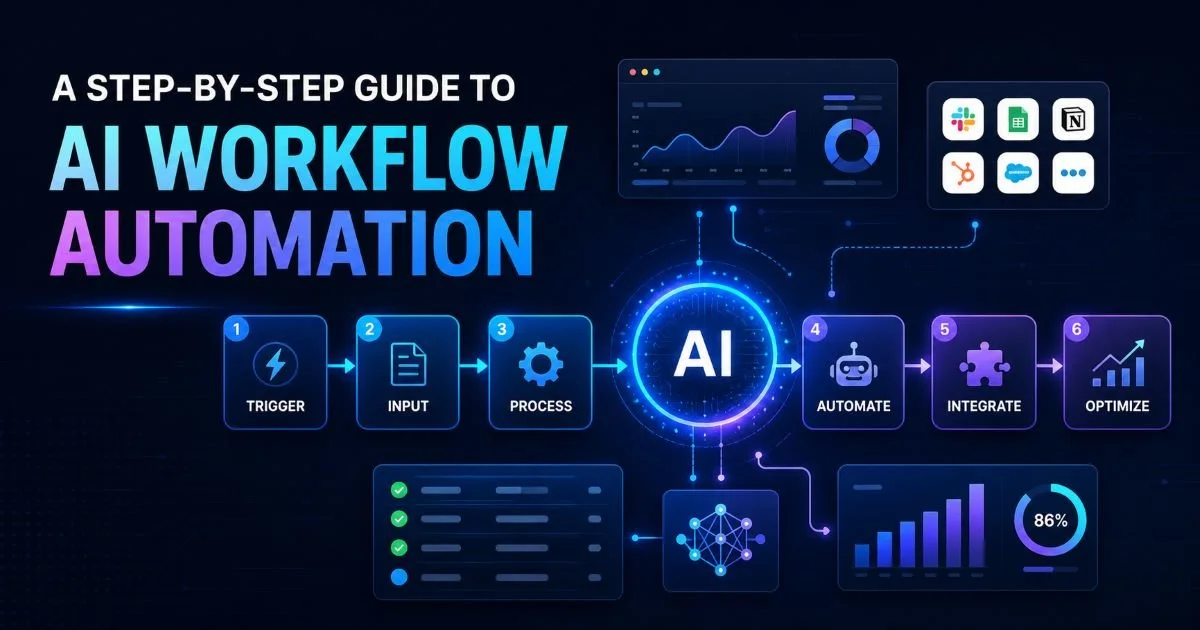
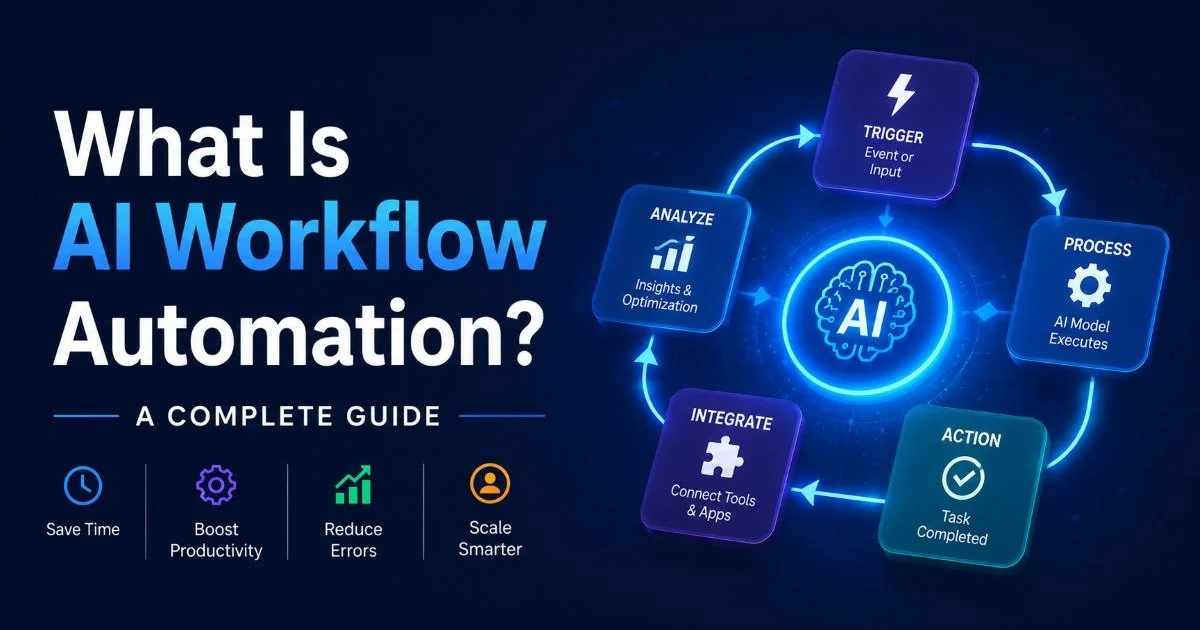
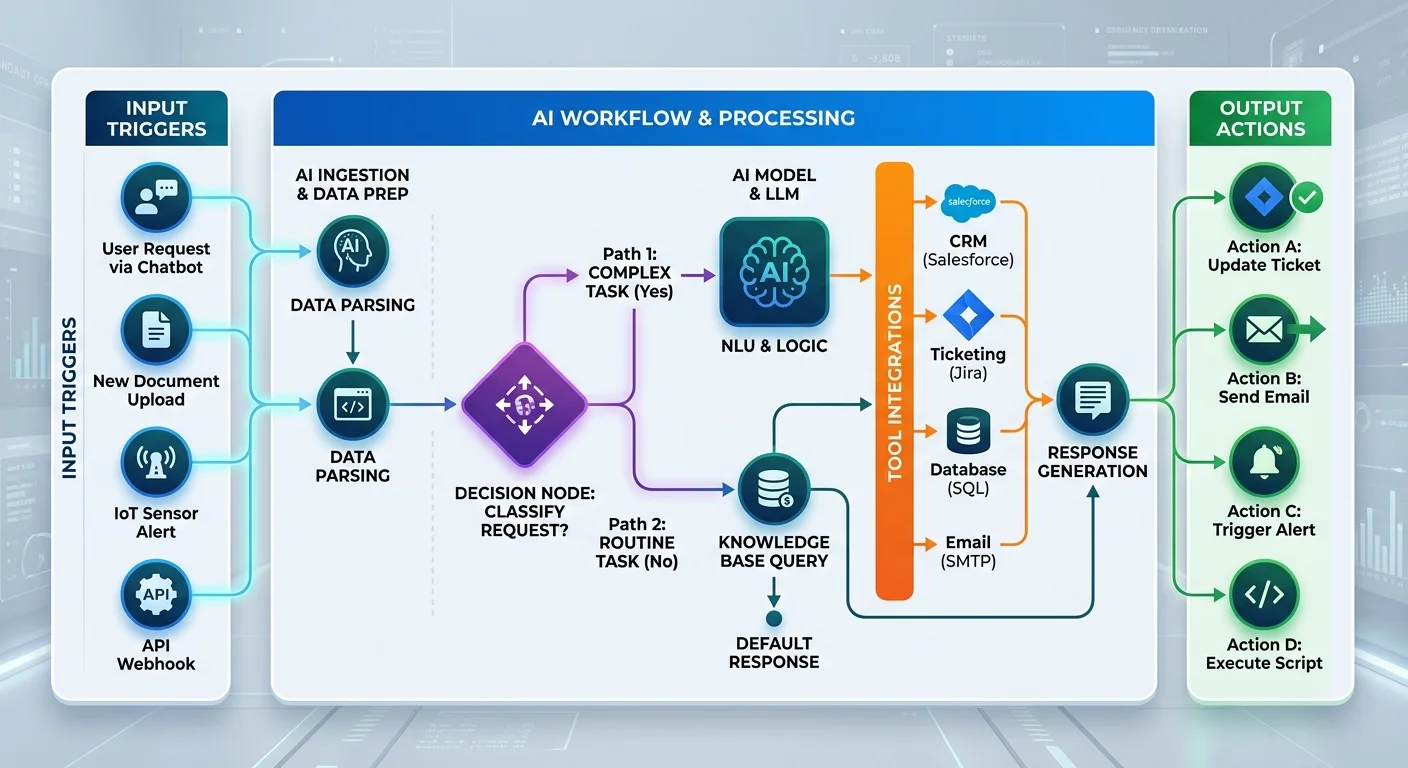
At its simplest, AI workflow automation combines traditional task sequencing with machine learning models that can interpret data, make decisions, and adapt behavior based on context. Think of it as a pipeline: a trigger event starts the process, AI models analyze incoming information, conditional logic routes the work, and connected tools execute each step. The intelligence layer is what separates this from basic automation; the system doesn't just follow a script, it evaluates conditions dynamically.
Core Components of an AI Workflow
Every AI-driven workflow shares a few building blocks. There's a trigger (an incoming email, a form submission, a schedule), a processing layer where AI interprets or classifies the input, decision nodes that branch the workflow based on conditions, and action steps that push results into connected applications. When you connect tools with AI, you eliminate the manual copy-paste cycles that eat hours from your team's week. A CRM update can automatically trigger inventory checks, customer notifications, and billing actions in sequence.
Structured Execution Explained
Structured workflow execution means every task runs in a defined order with clear inputs, outputs, and error-handling rules. This isn't a vague "set it and forget it" promise. Each node in the workflow has explicit success and failure criteria. If an API call fails, the workflow retries, logs the error, or routes to a human reviewer. This predictability is what makes AI workflow automation production-ready rather than experimental. Without structure, you get fragile automations that break silently and create more problems than they solve.
Map your workflow on paper first, identifying every decision point and failure mode before building anything in software.
The design phase matters enormously. Operations professionals who skip the planning step often end up rebuilding workflows multiple times. Define your data sources, expected volumes, edge cases, and escalation paths upfront. A well-designed workflow handles 95% of cases automatically and routes the remaining 5% to the right person with full context attached. That ratio is where real process efficiency automation lives.
Why AI Workflow Automation Matters for Operations Teams
Operations teams sit at the intersection of every department, managing handoffs between sales, support, finance, and fulfillment. Manual process management at this scale is unsustainable. When you automate business processes with AI, you're not just saving time on individual tasks. You're removing the friction between systems that causes delays, data inconsistencies, and dropped balls. The compound effect across dozens of daily workflows is substantial.
Time and Cost Impact
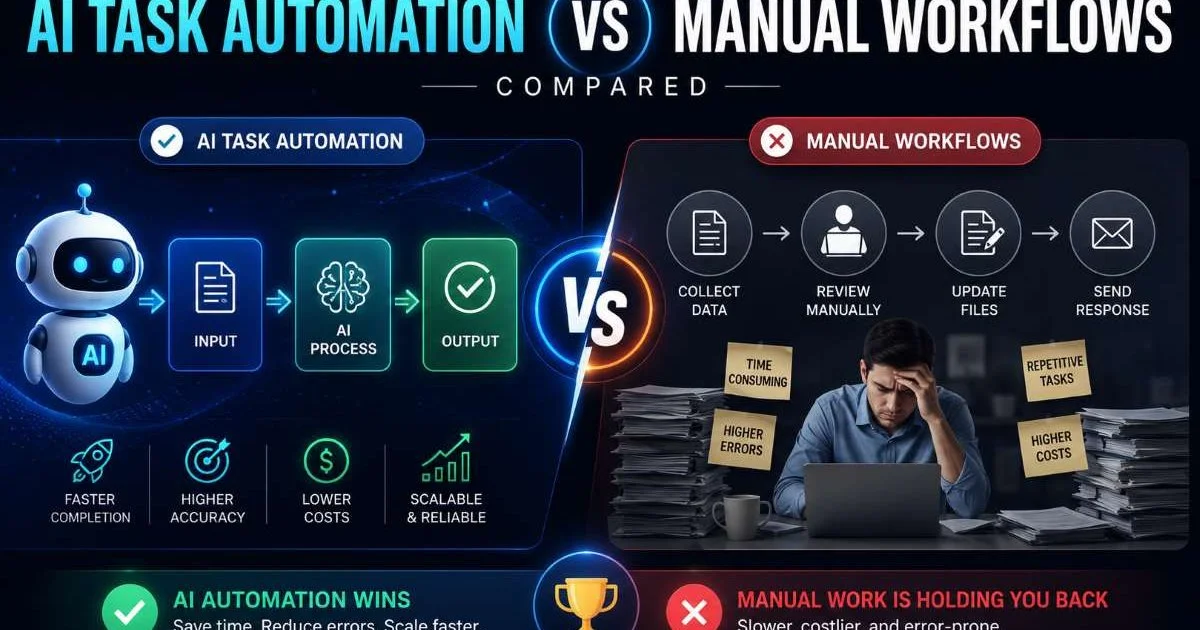
The numbers tell a clear story. Organizations implementing AI workflow automation report reducing process cycle times by 40 to 70 percent for standard operational workflows. Consider invoice processing: a manual workflow involves receiving the document, keying data into an ERP, matching against purchase orders, routing for approval, and scheduling payment. An AI-powered workflow extracts data from the invoice using OCR and NLP, validates it against existing records, flags discrepancies, and routes only exceptions to humans.
Beyond speed, there's the error reduction factor. Manual data transfer between systems has a typical error rate of 2 to 5 percent. At volume, those errors cascade into billing disputes, compliance issues, and customer churn. Structured workflow execution drops error rates below 0.5 percent for routine tasks because the system applies the same logic every single time, without fatigue or distraction. The practical benefits of workflow automation extend into compliance, auditability, and team morale as well.
Cost savings come from multiple angles: fewer hours spent on repetitive work, reduced error remediation, faster throughput, and the ability to scale operations without proportionally scaling headcount. A five-person operations team that reclaims 15 hours per week through automation can redirect that capacity toward process improvement, vendor negotiations, or customer experience initiatives. That's strategic leverage, not just cost cutting.
"The real value of AI workflow automation isn't doing the same work faster; it's freeing your team to do different, higher-impact work entirely."
Real-World Use Cases and Examples
Cross-Tool Automation in Practice
A mid-size e-commerce company uses AI workflow automation to connect their Shopify store, warehouse management system, customer support platform, and email marketing tool. When a high-value order comes in, the workflow automatically checks inventory levels, prioritizes fulfillment, sends a personalized confirmation email, and flags the account in the CRM for VIP follow-up. No human touches the process unless inventory is insufficient or the order triggers a fraud detection flag. The entire sequence runs in under 30 seconds.
In IT operations, teams use AI-driven workflows to handle incident management. A monitoring tool detects an anomaly, the workflow classifies its severity using an AI model trained on historical incident data, creates a ticket in the service management platform, assigns it based on team availability and expertise, and sends notifications through Slack or Teams. For low-severity issues, the workflow can even execute predefined remediation scripts automatically. The concept of using LLMs in operational environments is gaining traction as language models become better at interpreting unstructured alerts and logs.
Always include human oversight checkpoints in workflows that affect customer-facing processes or financial transactions.
Agent-Driven Workflows
AI agent workflows represent the next evolution. Instead of following a fixed sequence, an AI agent receives a goal (like "resolve this customer complaint") and determines the steps needed on its own. It might pull order history, check return policies, draft a response, apply a discount code, and update the ticket, all without a predefined path for each scenario. These agents use reasoning capabilities from large language models combined with tool access and memory to operate semi-autonomously within guardrails you define.
The distinction between a workflow and an agent is important. Traditional workflows are deterministic: if X, then Y. AI agent workflows are probabilistic: given this goal and these available tools, the agent determines the best path. Both have their place. Use structured workflows for high-volume, predictable processes. Deploy agents for situations with high variability where rigid rules would require hundreds of conditional branches to cover every edge case.
Also Check: Best AI Voiceover Tools for YouTube Videos
Common Misconceptions and Related Concepts
What AI Workflow Automation Is Not
The biggest misconception is that AI workflow automation replaces your entire operations team. It doesn't. It replaces the repetitive, low-judgment portions of their work. Your team still designs the workflows, monitors their performance, handles escalations, and improves the process over time. Another common myth: you need a massive dataset or a team of data scientists to get started. Modern workflow platforms offer pre-built AI components for tasks like document classification, sentiment analysis, and entity extraction that work out of the box with minimal training data.
Avoid automating a broken process. Fix the process logic first, then automate it. Automation amplifies both efficiency and dysfunction.
Some professionals confuse AI workflow automation with chatbots or simple if-then triggers. While chatbots might be one component within a workflow, the broader system encompasses data transformation, multi-step orchestration, error handling, logging, and cross-platform integration. A Zapier-style trigger ("when I get an email, add a row to a spreadsheet") is automation, but it's not AI workflow automation unless intelligence is making decisions within that chain. The "AI" part means the system adapts, classifies, predicts, or generates rather than simply relaying data.
How It Relates to RPA, BPM, and Orchestration
Robotic Process Automation (RPA) focuses on mimicking human interactions with software interfaces, clicking buttons and filling forms. It's useful but brittle; change the UI, and the bot breaks. AI workflow automation operates at the API and data layer, making it more resilient and scalable. Business Process Management (BPM) is a broader discipline that includes process mapping, governance, and continuous improvement. AI workflow automation is a tool within the BPM toolkit, not a replacement for it.
Workflow orchestration is the closest cousin. Orchestration platforms coordinate tasks across microservices and systems, often in engineering contexts. AI workflow automation borrows orchestration principles but adds intelligence, natural language understanding, and adaptive decision-making. For operations professionals, the practical takeaway is this: you don't need to choose one approach exclusively. The best automation strategies layer RPA for legacy system interactions, AI workflows for intelligent processing, and orchestration for complex distributed systems into a cohesive architecture.
The service is currently unavailable.
Frequently Asked Questions
?How do I start with AI workflow automation without disrupting operations?
?How does AI workflow automation differ from traditional RPA?
?What does structured workflow execution actually cost to implement?
?What's the biggest misconception about AI agents making routing decisions?
Final Thoughts
AI workflow automation is not a futuristic concept; it's a practical methodology that operations teams are implementing today to reduce manual effort, minimize errors, and scale processes without proportionally scaling headcount. Start by identifying one high-volume, rule-heavy process in your organization and build a structured workflow around it. Measure the results, refine the logic, and expand from there.
The organizations seeing the greatest returns treat this as an ongoing practice, not a one-time project. Your processes are only as strong as the thought you put into designing and iterating on them.
Disclaimer: Portions of this content may have been generated using AI tools to enhance clarity and brevity. While reviewed by a human, independent verification is encouraged.